
2014
Top 3 Foods That Promote Premature Death: How Many Are You Eating?
By Dr. Mercola
As recently reported by CNN Health and Time Magazine, five things account for nearly two-thirds of all deaths in the US, or about 900,000 each year: Heart disease Cancer Lung disease Stroke Unintentional injuries, including medication overdoses…
Energy Saving Approach to Cooking: The Wonderbag
By David Spero
You can never save too much energy when planning for life after TEOTWAWKI. But there is more to saving energy than shivering in the cold, in the dark, in your retreat. We need to…

Reclaim your rust pitted cast iron
By Our Half-Acre Homestead
Sandblasting? Steel wool, wire wheel, potato? Seasoning? Yep, it all works. Save that valuable cookware.
Cleveland food truck guide 2014: the hottest food trucks and where to find them
By Debbi Snook
Those daring young men (and women) in their cooking machines are back for another season of rolling feasts. Food truck season begins in earnest on Wednesday, May 7 with the first Walnut Wednesday, the…
Water Liberty: How Innovation Trumps Privatization
By Rady Ananda
The World Bank joins Nestlé in wanting to privatize water, deeming it “extremist” to suggest otherwise. But we have ways around the corporate paradigm.
Organic Showdown in Texas! OCA Political Director Arrested
By Organic Consumers Assn.
“When a government agency, the National Organic Program, that pretends to represent the organic community instead represents USDA bureaucrats and corporate profiteers, it’s time for organic consumers and our allies to rise up and take back…
How have spices spiced-up history?
By Michael Olson
When the day-to-day becomes too dull for our taste, we reach for the spice rack. This reaching for interest leads us to ask… How have spices spiced-up…
This ‘covert nuclear war’ on humanity
By Rady Ananda
Three incidents this year at the Carlsbad, New Mexico nuclear Waste Isolation Pilot Plant resulted from “a number of serious safety concerns” that led to a fire and radiation leaks, contaminating workers and nearby…
Will the US start a smallpox threat creation program?
By Edward Hammond, PhD
In May, the World Health Assembly will yet again consider the question of destruction of smallpox virus. In order to politically legitimize keeping smallpox samples, the United States appears to be positioning itself to…
Did Japan’s Prime Minister Serve Obama Beefsteak-Flavored Revenge for US Trade Rep’s TPP Rudeness?
By Naked Capitalism
I trust you’ll enjoy this long-form account of how President Obama put his foot in mouth and chewed in front of Japan’s Prime Minister Abe when he merely thought he was eating steak.
Compostable tower made of fungi & agricultural waste to rise in NYC
By Kimberly Mok
We’ve seen the amazing versatility of biologically-based bricks, or “bio-bricks” — be they made from bacteria, sand, mushrooms or even urine and wool. Now New York City-based design studio The Living will be building a tower made out of cornstalks and mushrooms….
New Gumpert book covers Corpo-Gov war on non-industrial good food
By Jonathan Benson
As the government continues to shut down family farms, your ability to make good food choices diminishes. Though much of it flies under the mainstream radar, there is a coordinated effort afoot to completely stamp…
MURS Radios a Useful Communication Tool
By Preparedness Advice
“Had I known what I know now, I would have likely skipped the FRS/GMRS radios I have and went right for MURS radios instead. They’re more versatile and less likely to be used by others.” ~Rethink Survival
Farming Free: Vandana Shiva on ‘food fascism’
By Thaddeus Christian
We interviewed the pre-eminent advocate for the preservation of food sovereignty, civil liberties and biological diversity, Vandana Shiva, to discuss the importance of food policy and how it affects what’s on your plate and in your garden.
Cheap Non-GMO Food Supply
By LISA RATHKE and DAVE GRAM
Vermont has raised the stakes in the debate over genetically modified foods by becoming the first state to pass a bill requiring that they be labeled as such in the grocery aisle, making the move despite the opposition of the powerful U.S. food industry.
Should Harry Reid’s corporate interests trump public grazing rights?
By Rady Ananda
Senate Majority Leader Harry Reid has a problem. All but one rancher has sold his grazing rights and gotten out of the cattle business on a certain piece of real estate in Nevada. Senator…
An Inconvenient Question for Michelle Obama
By Organic Consumers Association
FDA and Michelle Obama announce overhaul of food labels, with no mention of labeling GMOs (genetically modified organisms) On February 27, First Lady Michelle Obama launched a media blitz to tout the U.S. Food & Drug…
It’s Official – Russia Completely Bans GMOs
By Arjun Walia
Prime Minister Dmitry Medvedev recently announced that Russia will no longer import GMO products, stating that the nation has enough space, and enough resources to produce organic food. If the Americans like to eat GMO…
Make a 55-Gallon Compost Tumbler Fast, Cheap & Easy
By Rady Ananda
Good for the environment, composting may be the single most important supplement added to your garden soil. Compost is nutrient-rich humus that fuels plant growth, suppresses disease, and revitalizes depleted soils, all while recycling…
‘Remarkable’ recovery in Alzheimer’s patients
By Sayer Ji
Imagine an Alzheimer’s patient long given up for ‘gone,’ suddenly remembering their loved one’s faces? A recent study on patients with Alzheimer’s Disease found that less than a gram of turmeric daily, taken for three months,…
Why Does This Food Have 196 Ingredients?!
By Melissa Melton
In this day and age of genetically modified, subsidized, and highly processed food full of chemical additives and synthetic multisyllabic unpronounceables, would it surprise you to learn that for just $2.22, you can buy a…
Nearly free gardening with these simple tips
By Jim and Mary
For those that follow along with our little farm and website – you know how important it is for us to keep things simple and inexpensive – and there is no better…
TransEvolution: Homo predator, not Homo superior
By Rady Ananda
In TransEvolution: The Coming Age of Human Deconstruction, Daniel Estulin crafts a cogent and frightening scenario for the end of Homo sapiens, as new technologies enable genetic changes, bionic replacements and artificial, nanosized neural connections. We’re not…
Wait, Wait: Ohio law against lies meets 1st Amendment
By Rady Ananda
Is a Supreme Court brief ever gut-splitting funny? It is when satirist P. J. O’Rourke writes it.
Paint Thinner in Children’s Cereal Exposed
By Heather Callaghan
A lot of home builders and painters will know what trisodium phosphate (TSP) is. But a lot of them don’t know that they eat it for breakfast!
TransEvolution: Homo predator, not Homo superior
By Rady Ananda
In TransEvolution: The Coming Age of Human Deconstruction, Daniel Estulin crafts a cogent and frightening scenario for the end of Homo sapiens, as new technologies enable genetic changes, bionic replacements and artificial, nanosized neural connections.
Check out the free Garden Planner by Seed Savers Exchange
By Seed Savers Exchange
Our Garden Planner makes it easy to draw out your vegetable beds, add plants and move them around to get the perfect layout. Either feet and inches or metric units are supported and any shape of garden can be created.
Farm animals at play
By Food Freedom News
In the following two videos, we see goats playing and cows leaping for joy when released to pasture. Robin Mather notes, “If you give your herd something to do, you’ll have a treat that’s better to…
Food Pharmacopoeia in Pictures
By Thrive FNL
It has been said that God first separated the salt water from the fresh, made dry land, planted a garden, made animals and fish… All before making a human. He made and provided what we’d need before we were born. These are best & more powerful when eaten raw. We’re such slow learners…
19 EU States reject GMO corn; Council approves anyway
By Rady Ananda
Nineteen of the European Union’s 28 states rejected Dupont’s insecticidal corn, citing concern for pollinators. Five EU states approved the genetically modified maize, and four abstained. But because state votes are weighted based on…
Magic Peas and Two Front Teeth encourages healthy snacks
By Food Freedom News
Parents are always on the lookout for ways to encourage children to choose healthy foods, and Joelle Burnette’s new children’s book, Magic Peas and Two Front Teeth, does just that. With less than a week remaining…
The Dumb Way to Defend Food Gardening
By Pros Ecutethem
Dumb, dumb, dumb! Waiting for someone to have their garden ripped out and then trying to help them one by one, assuming we can even know all those who are being stepped on? Writing…
How Obama-Monsanto’s Food Act Destroys Small Farms
By Rady Ananda
On par with Stalin’s farm collectivization program of the 1930s, Monsanto’s push (to the tune of $8.8 million in lobby bribes in 2008 alone) for the Food Safety Modernization Act is already achieving the…
Tell General Mills: No GMOs in breakfast cereals
Petition by Lee Camp
To: General Mills Chairman and CEO Kendall J. Powell
Will you help Lee pressure General Mills to remove genetically modified ingredients from all of its breakfast cereals by signing his petition and sharing it…
The Dr. Oz Show: Information I Couldn’t Share
By Dr. Mercola
Last week I went to New York to tape a segment with Dr. Oz on multivitamins. It’s scheduled to air on Monday, February 10th.
US Farmers Abandoning Genetically Modified Seeds: ‘Non-GMO crops more profitable’
By Daniel Jennings
A growing number of farmers are abandoning genetically modified seeds, but it’s not because they are ideologically opposed to the industry. Simply put, they say non-GMO crops are more productive and profitable. Modern Farmer magazine…
I Am Steve Marsh: Global organic protection campaign faces trial
By Rady Ananda
Steve Marsh’s organic canola fields in Western Australia suffered 70% genetic contamination from a neighboring biotech farm that sowed Monsanto seeds. As a result, he lost organic certification after 11 years, and his livelihood…
.
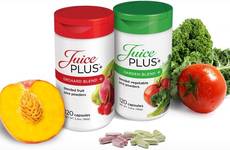
Juice Plus+® provides the nutritional essence of 25 fruits, vegetables and grains in a convenient capsule form. Click here to learn more.
And much more…




 Food Freedom